Source Aba Group, translated from Polish – Original article HERE
Microbiological examination of cosmetic files
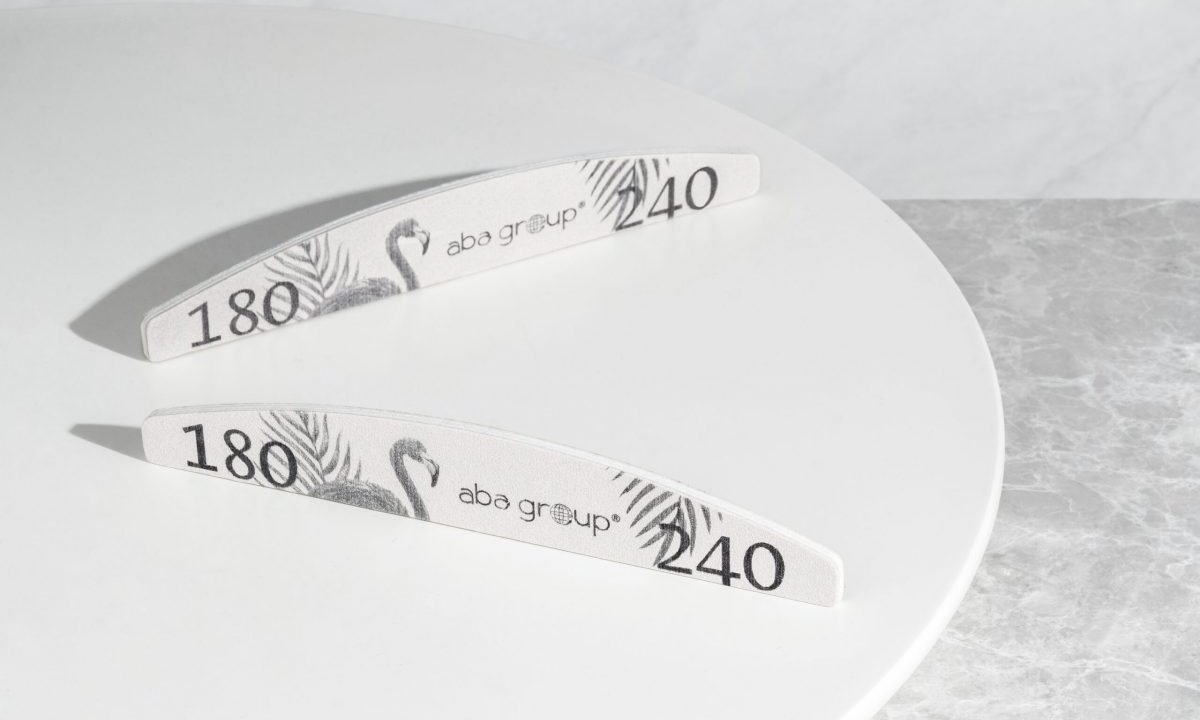
INTER GROUP commissioned a microbiological test of the nail files after use to see how many pathogens there were. You can find the test results below.
Purpose of research
The aim of the study was to check the amount of bacteria and fungi on the file used, but also to identify the microorganisms on them. Two types of files were used in the test
– First: used for a cosmetic treatment, without additional cleaning,
– Second: the file is disinfected with a broad-spectrum agent 2-3 days after the treatment and 14 days after the treatment.
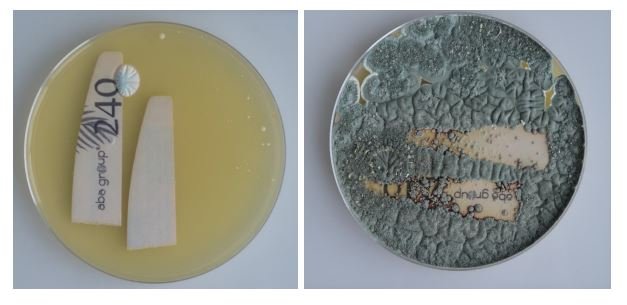
To show the growth of the microorganisms, a visualization was also made showing the growth of filamentous fungi after 10 days.
[woo_product_slider id=”195917″]
The tests showed that the number of bacteria and fungi was the same in the case of a file disinfected with cleaning agents, as well as a used file that was not disinfected. In this case, the number of microorganisms was very similar even after incubation for several days.
Both in the case of the file used for the treatment, but not subjected to disinfection, and the disinfected version, pathogens that can often be found on the skin were confirmed:
– cocci of the genus Staphylococcus – S. borealis and S. hominis,
– Micrococcus luteus,
– Rothia koreensis.
In the case of fungus, found:
– Expanded brush,
– Penicillium brevicompactum.
We asked a few questions about the research to Marta Tokarska-Jaszak, head of the Microbiological Laboratory of the Jagiellonian Center of Innovation
1. How did the research work – where do we start?
The tests carried out at the Jagiellonian Center of Innovation consisted in checking the number and type of bacteria and fungi on the disinfected files and without disinfection. The first stage of the research was microbiological inoculation on appropriate culture media. The next step was to identify the grown microorganisms. In the JCI laboratory, we use the MALDI-TOF mass spectroscope for this purpose.
[woo_product_slider id=”195915″]
2. How long does such research take?
To check the amount of bacteria on the files, we had to cultivate for 3-4 days. Filamentous fungi are organisms that are much more difficult to cultivate and identify, therefore their study always takes longer. We need 5 to 8 days for fungus growth. As mentioned before, we also identified the microorganisms that had grown out. Thanks to modern technology, such as the MALDI-TOF mass spectrometer, the identification of microorganisms takes only several minutes.
3. What can we say about the bacteria that have been identified on the file?
Bacteria naturally occurring on human skin, such as Stapylococcus cocci, e.g. Staphylococcus haemolyticus or Staphylococcus borealis, were identified on the examined cosmetic files. In addition, during the study, a strain of Rothia koreensis was detected, which may be dangerous for people with reduced immunity.
We also identified filamentous fungi grown on the surface of the files. These were mainly Penicillium fungi (Penicillium expansum and Penicillium brevicompactum). These fungi have the ability to produce dangerous mycotoxins.
4. Why is the file not a reusable tool?
On the basis of the conducted research, we found the presence of, among others, cocci, as well as bacillus, which have the ability to form spores. Reusing the same file (even when it is used by one person) may increase the risk of transferring microorganisms to the skin.
Conclusions
Laboratory tests confirm that disinfecting the file with disinfectants does not work and therefore cannot be used as a means of repeated use of the file. Due to the construction of the tool and its roughness, it is not possible to clean it 100%. In addition, a file sprayed with this type of agent will swell and start to sticky, making it impossible to use. One method of cleaning the file that can come to mind is autoclaving. It is also not a good idea, because the high temperature and water vapor will effectively break the file, and additionally it will crinkle it – it will not be possible to use it.
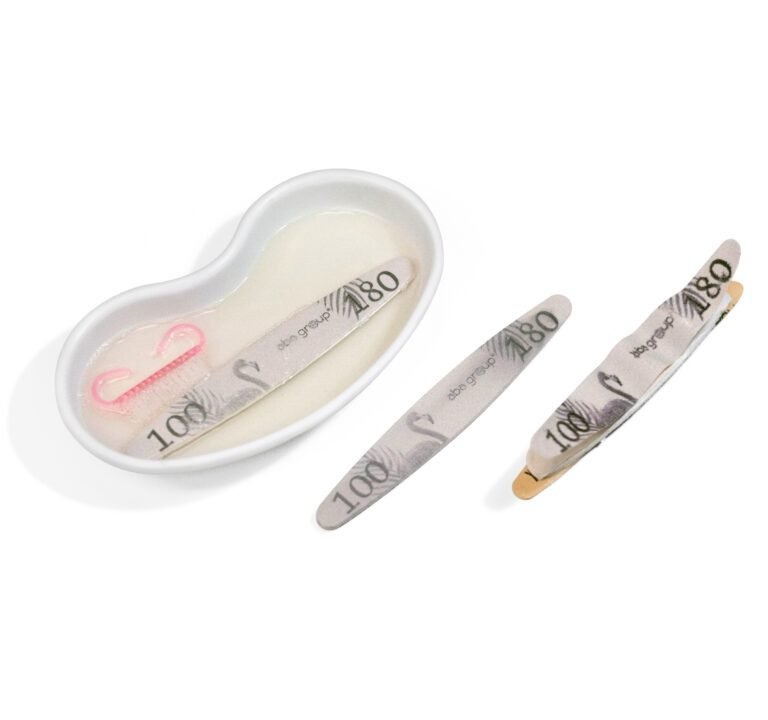
The file cannot be cleaned 100%, therefore it is undeniably a disposable tool. Use the file only once!
You can find the full report here: Microbiological examination of cosmetic files
Source Aba Group, translated from Polish – Original article HERE